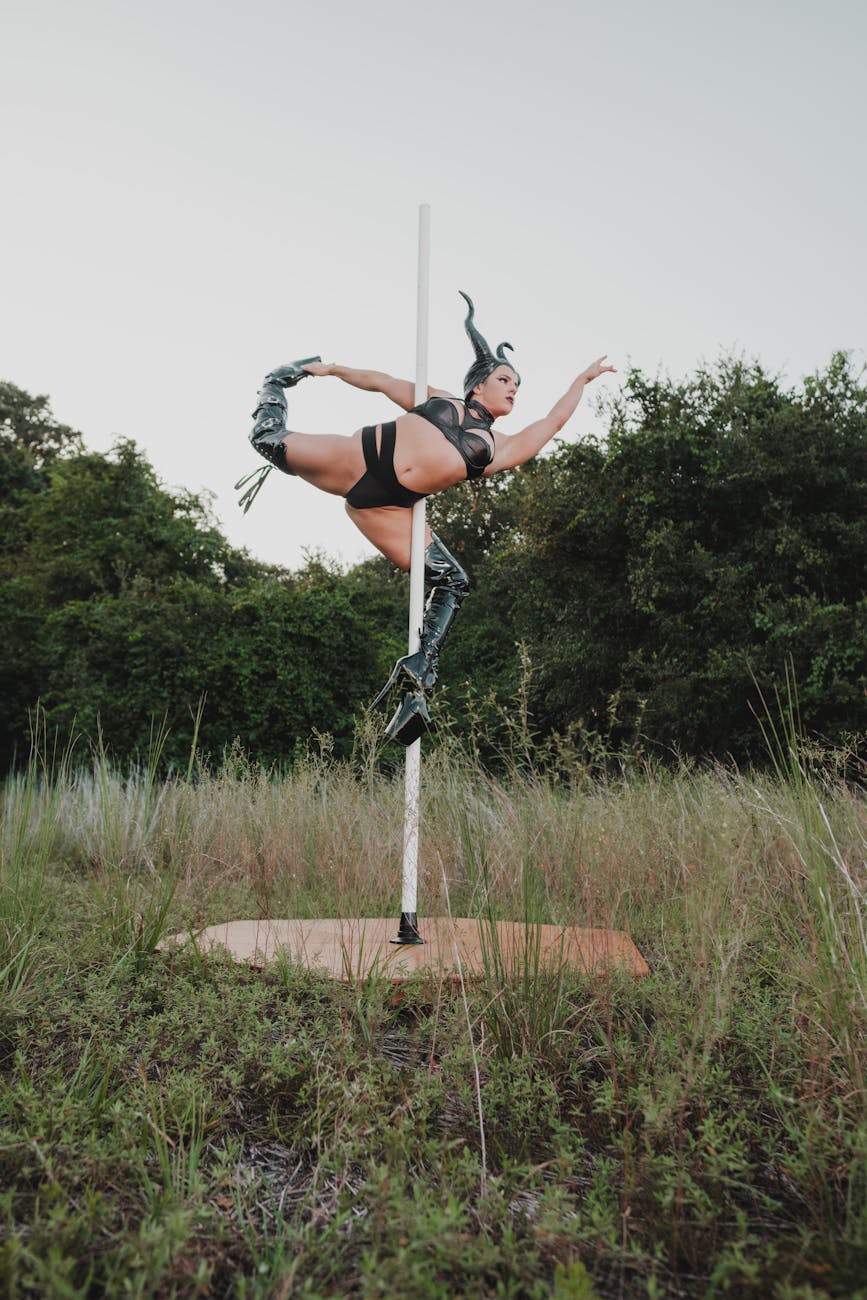
Strippers are the unrecognized professional athletes of the world. I’m not even talking about doing pole tricks or dancing on stage. The amount of stamina it takes to make it through a shift is astounding. And we do it in platform heels.
Sure, they’re more comfortable than civilian heels, but it’s still a feat nonetheless. I know that I sound like every customer who says, I don’t know how you all wear those all night long- implying that it’s difficult and abnormal. They’re not wrong though- we just count ourselves lucky to have platforms instead of zero support stilettos.
Platforms or not, heels alter our kinetic chain alignment, or how our body naturally aligns. Over time, this can alter the way we stand when we are not wearing heels as well, which can lead to pain and injury. In order to combat this, it is important to have a recovery routine in place to reduce the risk of injury, and to correct the altered alignment, training our brains and bodies to stand and move correctly.
If you find yourself sticking your butt out, or having a hard time walking in heels without low back pain, you might have what many of us get- anterior pelvic tilt aka stripper booty. If said “tuck your tailbone,” and you find that you need to hear that cue to stand straight up, you might have stripper booty. Unfortunately, there’s not one exercise or stretch that will fix it, and it’s not something that happens over night. The good news is that with the right recovery and training program, it is fixable.
Fixing stripper booty has several components. First, hip mobility is important. Because our hips are in a constant state of flexion when we wear heels, we need to warm up the connective tissue around the joints to reduce the risk of injury when we stretch. Second, we need to strengthen the muscles around our hip girdle; the TFL, glutes, hamstrings, quads, and psoas. This helps us accurately and adequately engage our muscles. It also provides more force when we want to stretch our muscles using reciprocal inhibition- aka, engaging one muscle to stretch its antagonist, or opposite muscle. Lastly, we stretch. Only stretch after mobility to reduce the risk of injury. This might sound like a lot of work, but ideally we will be intentional about our workouts, and utilize compound movements, so that we can work on multiple issues at once.
Some of my favorite compound exercises are banded glute bridges, down dog toe touches, and bird dogs.Banded glute bridges engage the core, TFL, adductors, hamstrings, and quads while dynamically stretching the front hip flexors. Down dog toe touches are great for shoulder mobility, core strength, and arm stability. Bird dogs are great for core strength while correcting tailbone placement by providing hip mobility in a position that the tailbone can’t move from the correct form, as long as you are actively pressing your low back and tailbone into the floor. Don’t sleep on bird dogs, because they are arguably the most helpful exercise for correcting anterior pelvic tilt. Reclined cobbler’s pose also helps keep the tailbone in the correct position while statically stretching the outer hips.
The side effects of heels can be severe and chronic, but with the right routine for you and your lifestyle, we can minimize those effects and reduce the risk of injury. Happy hustling babes!


