Ecdysiast (noun) a striptease performer
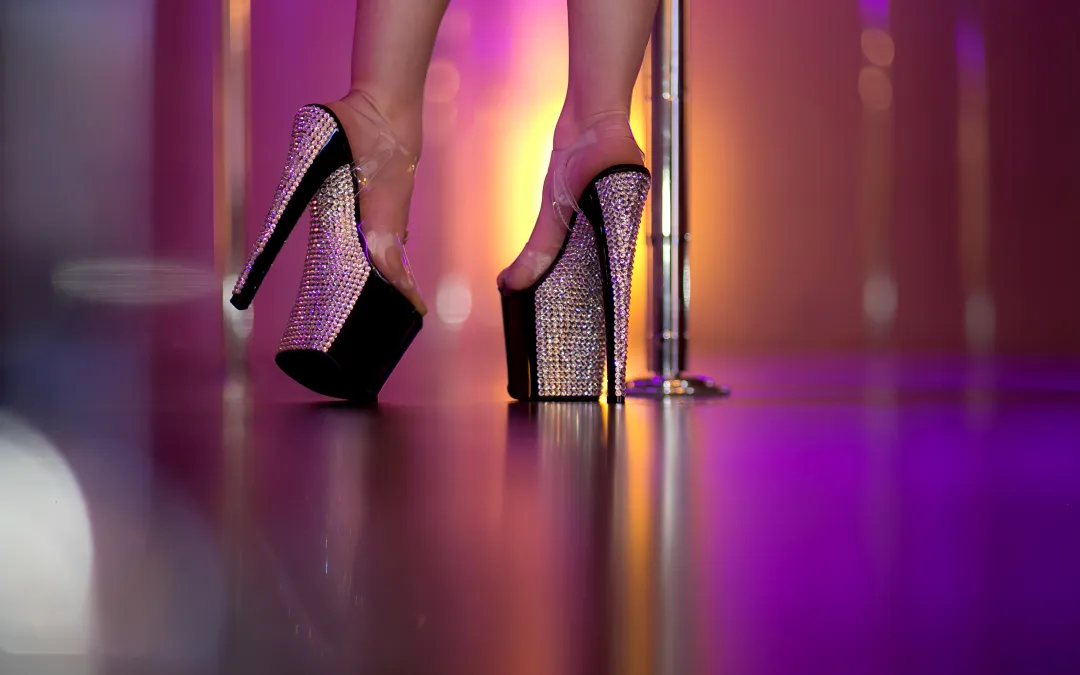
Some often repeated maxims in the stripper community are that our knees hurt (aka stripper knees), we stand differently, and we have bruises. These are the result of twerking on stages made of materials that were only selected with the club budget and aesthetics in mind, and being required to wear heels at work. High heels force the body into an unnatural position, causing a wide range of problems, even considering the specifications of the modern day stripper heel. When we alter our body mechanics over long periods of time, the effects can be catastrophic. These problems are all connected, complicated, and take time to rehabilitate, especially while still actively working.
When we wear heels, our weight is forced forward, and our center of gravity shifts. Naturally, our body will compensate by pushing our chest out and our booty back. Over time, standing this way becomes automatic, even out of our heels. Standing this way as a default indicates an anterior pelvic tilt. When this occurs in the body, it takes concentrated effort to tuck the tailbone under and zip the abdominals up the frontside body; lying supine (on the back), may hurt the tailbone and hips; the hips might pop or hurt when twerking on the floor. Left untreated, an anterior pelvic tilt may lead to the development of sciatica, as well as increase an individual’s risk of injury.
High heels may also cause plantar fasciitis, pain in the area of the foot used for walking and movement. Because strippers work such long hours in. heels, we are at risk to develop sciatica and plantar fasciitis at the same time, leading to chronic pain in the lower half of our body. Certain muscles remain flexed or stretched when in heels, and defaulting to the body alignment that occurs while wearing heels, when not wearing them, can exacerbate the problem.
In order to combat these issues, a workout program for strippers should focus on mobility, self-myofascial release, and strength training can help with maintaining proper kinetic chain alignment, proper muscle length, and joint pain. With a consistent recovery routine, strippers can successfully navigate the industry while minimizing pain and risk of injury. It is not easy, but it’s worth it in the long run.
Leave a Reply